From Caracas to New York
María Teresa Carreño García was born in Caracas on 22 December 1853 into a family already steeped in music — her father, Manuel Antonio Carreño, was a musician and statesman. Political upheaval pushed the family to New York, where the eight-year-old made her public debut in 1862, drawing immediate critical attention. She subsequently studied with Louis Moreau Gottschalk and, briefly, with Anton Rubinstein, absorbing the high-Romantic tradition at its most demanding.
Carreño's career defied Victorian convention at every turn. She performed across Europe and North America as a soloist of fearsome technical authority, was engaged as an opera singer for a period in the 1870s, and conducted opera in Venezuela in 1885 — an almost unheard-of role for a woman in that era. She championed Edvard Grieg's Piano Concerto in A minor, and Grieg himself praised her interpretation. Audiences in Germany, where she settled for significant stretches, nicknamed her the "Valkyrie of the Piano." She married four times — among her husbands was the composer and pianist Eugène d'Albert — and continued performing at the highest professional level into the early twentieth century. She died in New York in 1917 and was eventually reinterred in Caracas in 1977.
The Complex That Bears Her Name
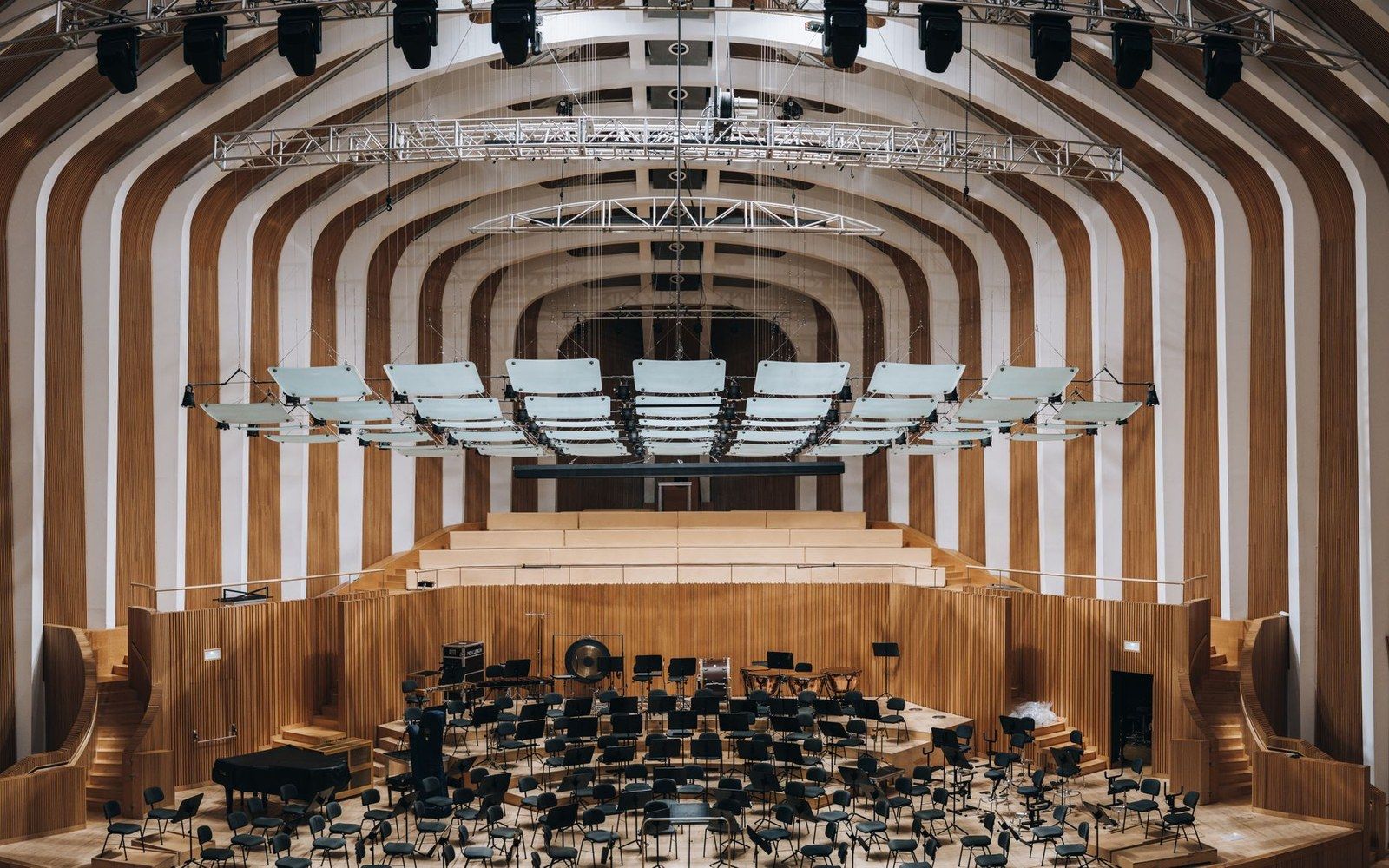
The Teresa Carreño Cultural Complex — Teatro Teresa Carreño — opened in Caracas in 1983, sited on the Paseo Los Caobos boulevard alongside the Museo de Bellas Artes. Designed by a team led by Venezuelan architects Jesús Sandoval and Tomás Lugo, the concrete structure houses two main halls, the largest seating roughly 2,500 people. It stands as the principal venue for large-scale classical performance in Venezuela, hosting the Simón Bolívar Symphony Orchestra and international companies. The building's mass and scale are a deliberate civic statement: a national concert house proportioned to match the pianist it commemorates.