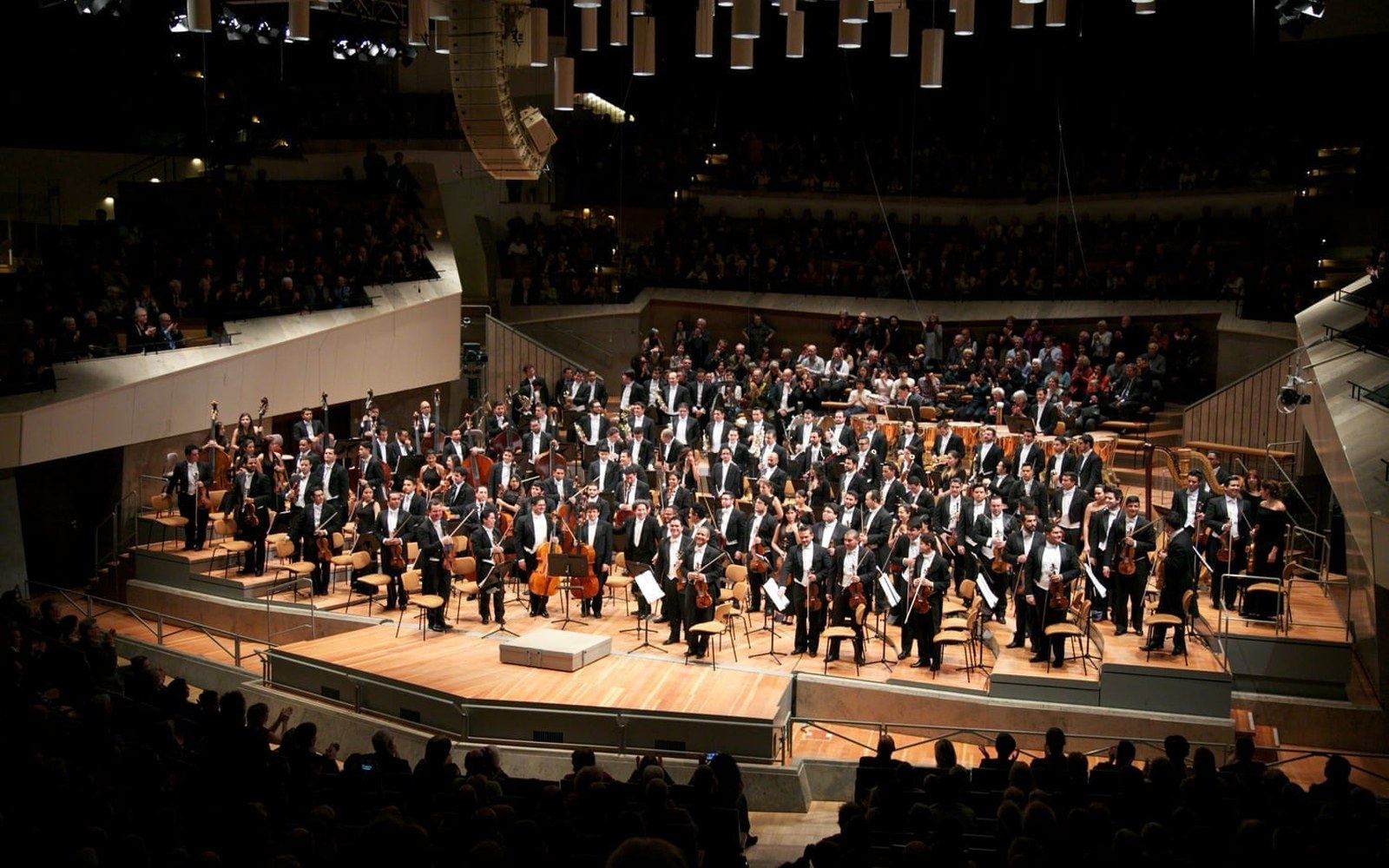
The Rehearsal That Counted
On a February afternoon in 1975, eleven young musicians gathered in an underground parking garage in Caracas and played. The session had been organised by José Antonio Abreu — economist, organist, harpsichordist and music educator — who had spent years arguing that classical music training was not a privilege to be rationed but a social instrument to be deployed at scale. The eleven who showed up that first day are the number that appears in El Sistema's own institutional account of the event. By the time Abreu died in 2018, the programme he founded in that garage had enrolled, by its own census figures and an Inter-American Development Bank review published in 2007, several hundred thousand active participants.
The programme's formal name is the Fundación Musical Simón Bolívar, though the world knows it by the shorthand Abreu coined in the early years: El Sistema — the system. Its full official title has shifted across decades as government sponsorship structures changed, but the pedagogical model has remained consistent: free instruments, free tuition, intensive ensemble rehearsal from the earliest stages, and the núcleo (local teaching centre) as the unit of delivery. By the 2010s, according to El Sistema's own census data, the network of núcleos had grown to more than 400,000 enrolled musicians across Venezuela, with regional centres in every state.
What the Model Actually Does
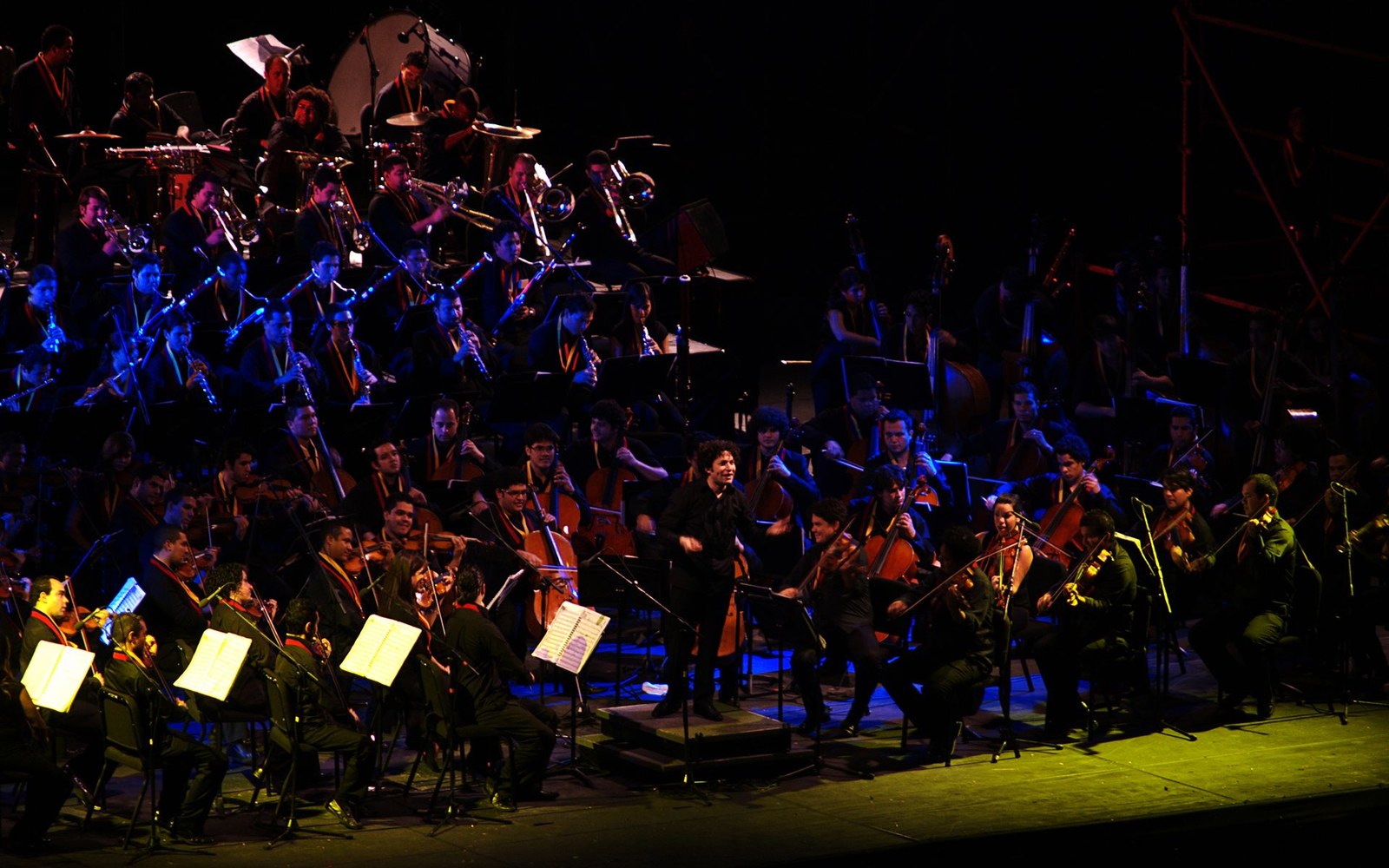
El Sistema's distinguishing claim has always been the inversion of conventional music pedagogy. Where most conservatoire traditions move a student from individual technique toward ensemble playing over years, El Sistema places learners inside an orchestra from the earliest weeks. The ensemble is not the reward for mastering the instrument; it is the environment in which the instrument gets mastered. Children learn surrounded by sound, expected to listen across a section and to contribute before they are technically ready, on the argument that social integration precedes and accelerates individual acquisition.
The Simón Bolívar Symphony Orchestra — founded within El Sistema as its flagship ensemble — became the international face of this argument. Under Gustavo Dudamel, who was himself a product of the Barquisimeto núcleo and rose to lead the orchestra in his early twenties, the ensemble toured Europe and the United States and became shorthand in music education debates for a generation. Dudamel's subsequent appointments — to the Los Angeles Philharmonic and later the Paris Opera — were understood, and documented, as downstream consequences of a programme that had started eleven instruments short of a chamber orchestra in a concrete basement.
Roots and Reach
Abreu's 1975 initiative did not emerge in a vacuum. Venezuela had a conservatoire tradition stretching back into the nineteenth century, and the country's oil revenues through the 1960s and early 1970s had expanded state cultural spending. What Abreu added was the insistence on social geography: the núcleo would go to poor urban neighbourhoods, not wait for students to find their way to a conservatoire. The parking garage was not a romantic origin detail but a literal description of available infrastructure — the programme received no dedicated building for its first months.
By the 2010s, El Sistema's model had attracted replication across Latin America, Portugal, Scotland and the United States, with programmes explicitly citing the Caracas founding as their template. UNESCO has recognised El Sistema's contributions to music education and social development in its documentation of intangible cultural heritage practice, and the Inter-American Development Bank's 2007 analysis remains one of the most-cited independent assessments of the model's reach and structure.
Eleven musicians, February 1975, underground. The specific numbers matter because El Sistema has always insisted on measurement — of participants, of núcleos, of hours of instruction — as part of its argument that music training at this scale is policy, not philanthropy.