Sculpture Commissioned to Solve a Problem
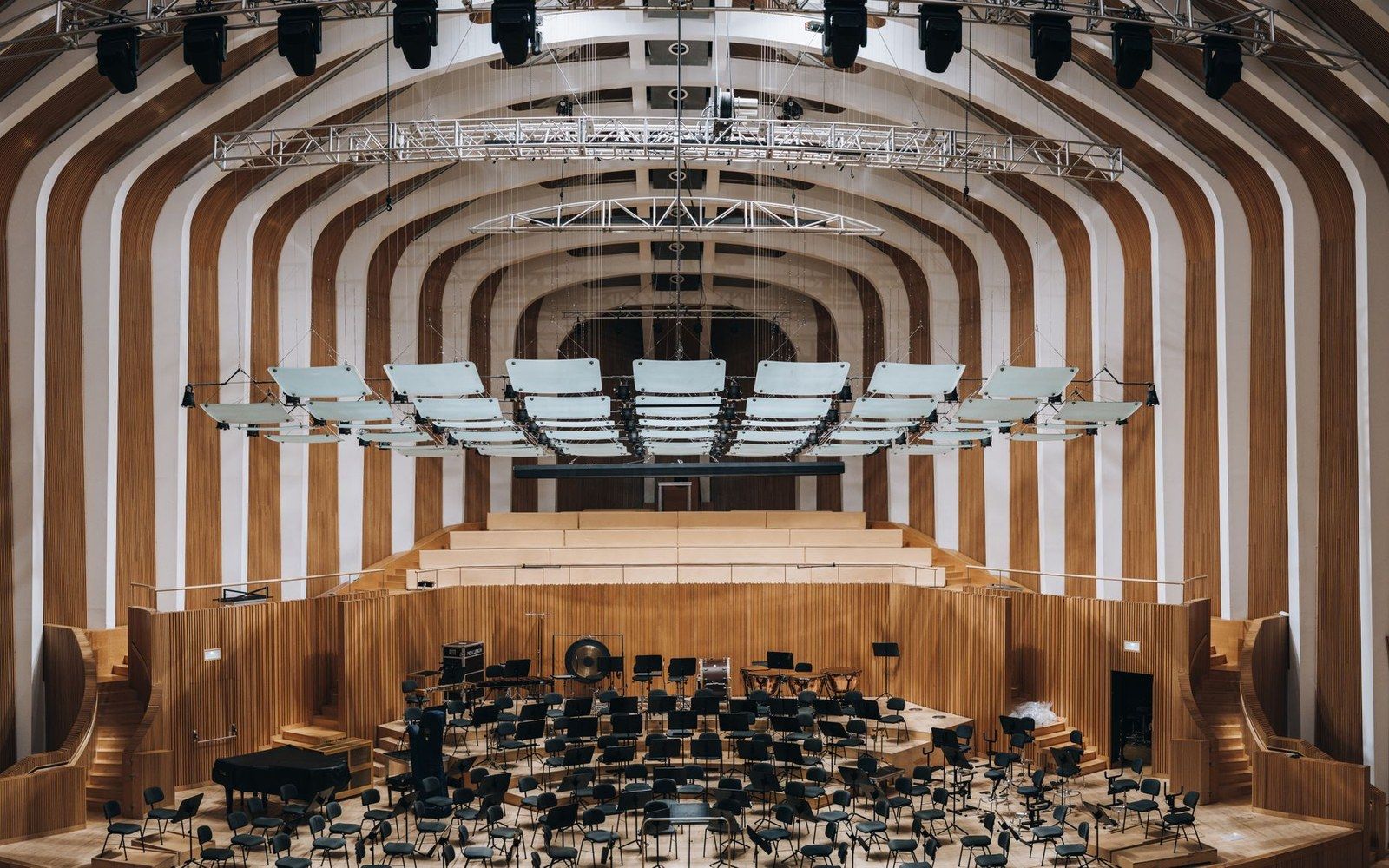
When Carlos Raúl Villanueva designed the Aula Magna as the centrepiece of the Ciudad Universitaria de Caracas, he faced a constraint that pure architecture could not resolve: a concert hall and lecture auditorium seating roughly 2,700 people, whose soaring reinforced-concrete ceiling was acoustically far too high to manage sound without intervention. The solution he chose was not a technical afterthought. He invited Alexander Calder — by 1952 already the defining figure in large-scale kinetic and mobile sculpture — to design a system of suspended panels that would distribute and diffuse sound while remaining, in every visible sense, a work of art.
Calder worked with the American acoustic engineer Robert Newman of Bolt, Beranek and Newman, a firm that had already built a reputation in concert-hall acoustics. Newman's calculations established the required positions, angles, surface areas and densities of the panels: each element had to deflect sound waves toward the audience rather than allowing them to dissipate upward into dead air or return as disruptive echoes. The geometry was not decorative guesswork. Panel placement followed modelling of the hall's reflection patterns, and the angles at which individual units are tilted correspond to specific acoustic targets on the floor below.
Calder then made that functional framework into something else entirely. The eighty-five panels — each cast in fibreglass, a material light enough to be suspended and robust enough to hold its shape under decades of still air — were painted in Calder's characteristic primaries and blacks against white, so that the ceiling becomes an animated field of flat, floating colour. From the floor, the installation reads as a single composition: clouds, as the work's Spanish name, Nubes Acústicas (acoustic clouds), describes them, drifting at different heights and orientations. Some panels measure a few tens of centimetres across; others extend to several metres. Their distribution across the ceiling is neither symmetrical nor random — it is the direct product of the acoustic map Newman produced.
How the Panels Actually Work
Sound diffusion in a large hall depends on breaking up flat, parallel surfaces that would otherwise cause flutter echo or standing waves. The Nubes Acústicas solve this by presenting the ceiling as a field of angled, non-coplanar reflectors. When sound energy rises from the stage, it strikes panels set at calculated angles and is redirected downward and laterally, reaching listeners across the hall's seating area with reduced time-delay variance. The fibreglass construction matters: the material is sufficiently rigid to reflect mid- and high-frequency sound effectively, rather than absorbing or transmitting it. Low frequencies, which have long enough wavelengths to diffract around the panels, are managed partly by the hall's own volume.
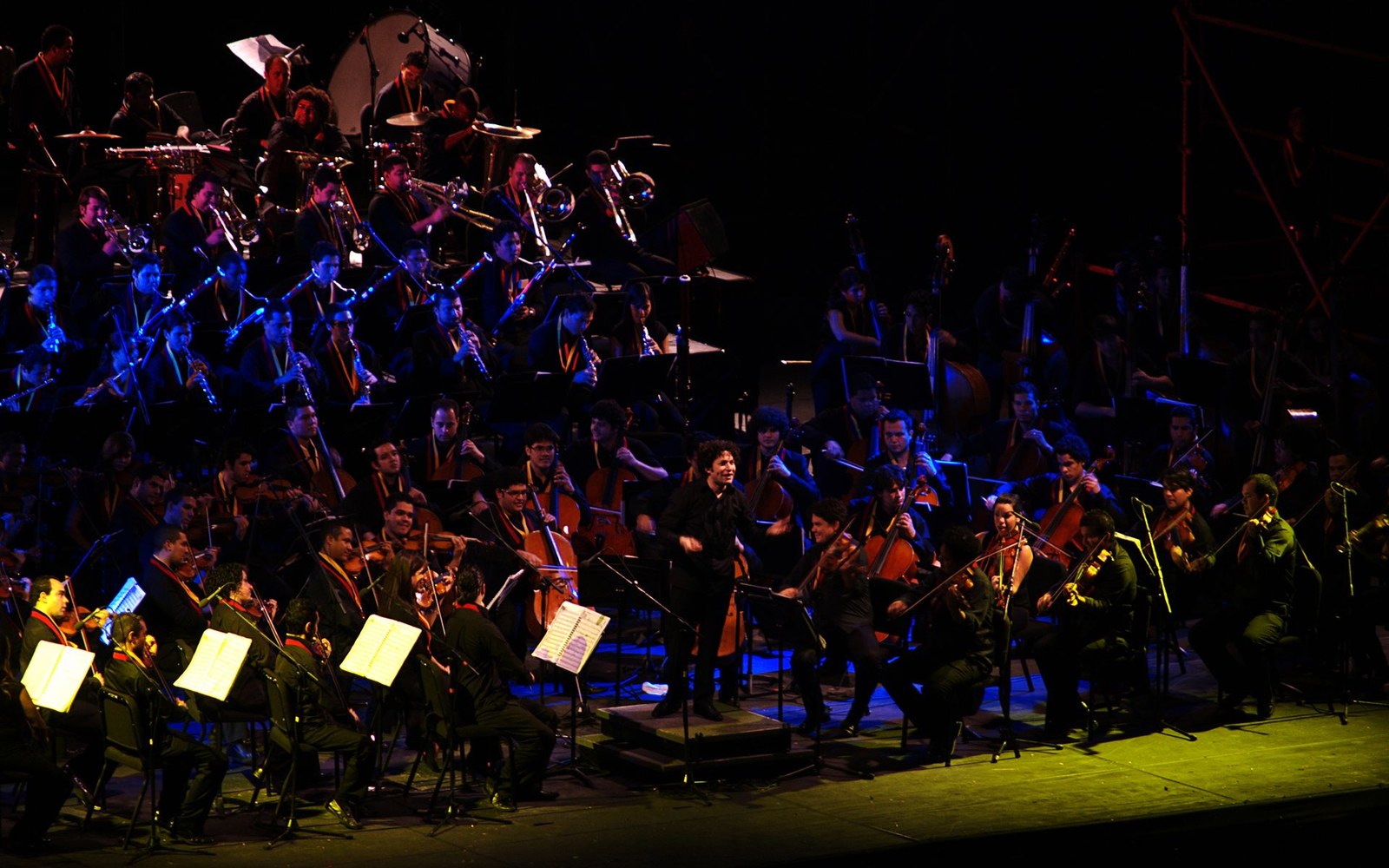
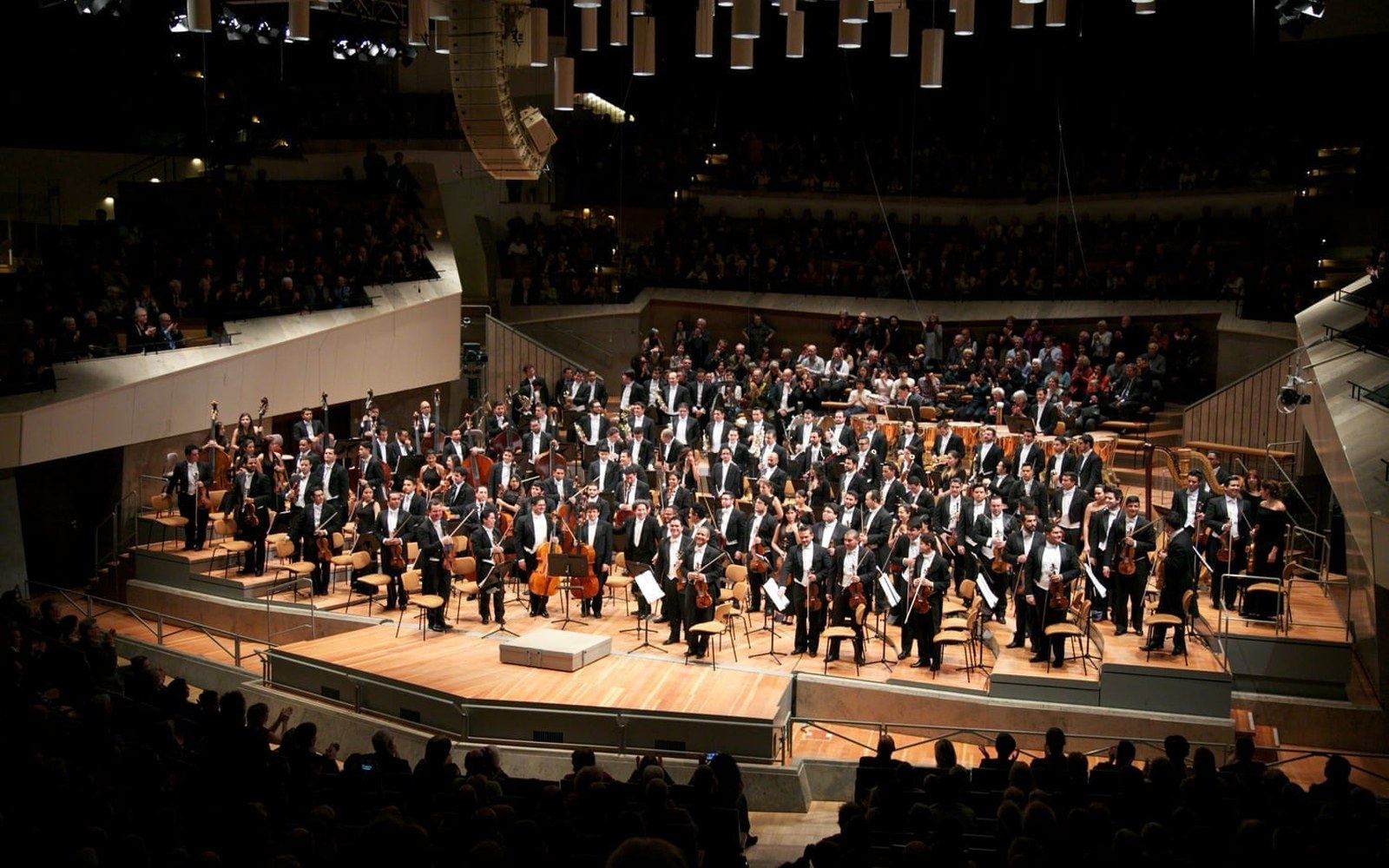
The result, measured in the decades since the Aula Magna opened, is a room with a reverberation time and clarity index that allow both orchestral performance and unamplified speech — a double requirement that acoustic designers routinely find difficult to satisfy in a single space. The Simón Bolívar Symphony Orchestra has performed there; so have international soloists and lecturers. Neither use case requires electronic reinforcement under normal conditions, which is precisely what Newman's specification promised and Calder's geometry delivered.
Installation in 1952 required suspending each panel from the concrete structure above at the exact three-dimensional coordinates the acoustic model specified. Altering any panel's position would shift its reflection angle and compromise the design. The installation was therefore executed to engineering tolerances rather than to the approximations that purely decorative ceiling work permits. UNESCO recognised the Ciudad Universitaria de Caracas as a World Heritage Site in 2000, citing it as a masterwork of modern urban planning and architecture — a designation that encompasses the Aula Magna and, by extension, the Nubes Acústicas as an inseparable component of the building's integrity.
What Calder produced in the Aula Magna is among the clearest demonstrations that acoustic engineering and visual art need not occupy separate vocabularies. The panels are measurably effective diffusers; they are also documented as Calder's largest permanent interior commission. Neither fact diminishes the other. The clouds work because the physics requires their shape, and the shape is, without qualification, sculpture.