Ciudad Bolívar and the Crossing That Defined It
The city now called Ciudad Bolívar was founded in 1764 under the name Santo Tomé de la Nueva Guayana, then renamed Angostura — Spanish for "the narrows" — before receiving its present name in 1846. That constriction in the Orinoco, which drops the river to its tightest navigable width for the entirety of its 2,140-kilometre course, made the site strategically irresistible: whoever controlled the crossing controlled movement between the Llanos and the Guiana Highlands beyond. Simón Bolívar understood this when he used the city as the base from which he directed the campaigns of 1817–1821, and the Congress of Angostura convened here in 1819 to proclaim Gran Colombia.
The colonial waterfront — the Paseo Orinoco and the stacked, painted houses of the historic centre — sits on a bluff of Precambrian granite that keeps the lower town clear of seasonal flood. The historic centre's outstanding architectural coherence has been noted in UNESCO's documentation, a grid of late-colonial and republican buildings that includes the cathedral, the Capitolio, and the Casa del Congreso where the 1819 congress met. The historic centre of Ciudad Bolívar is documented by UNESCO as part of Venezuela's Tentative List for World Heritage inscription, a status that reflects the density of intact fabric rather than any formal listing.
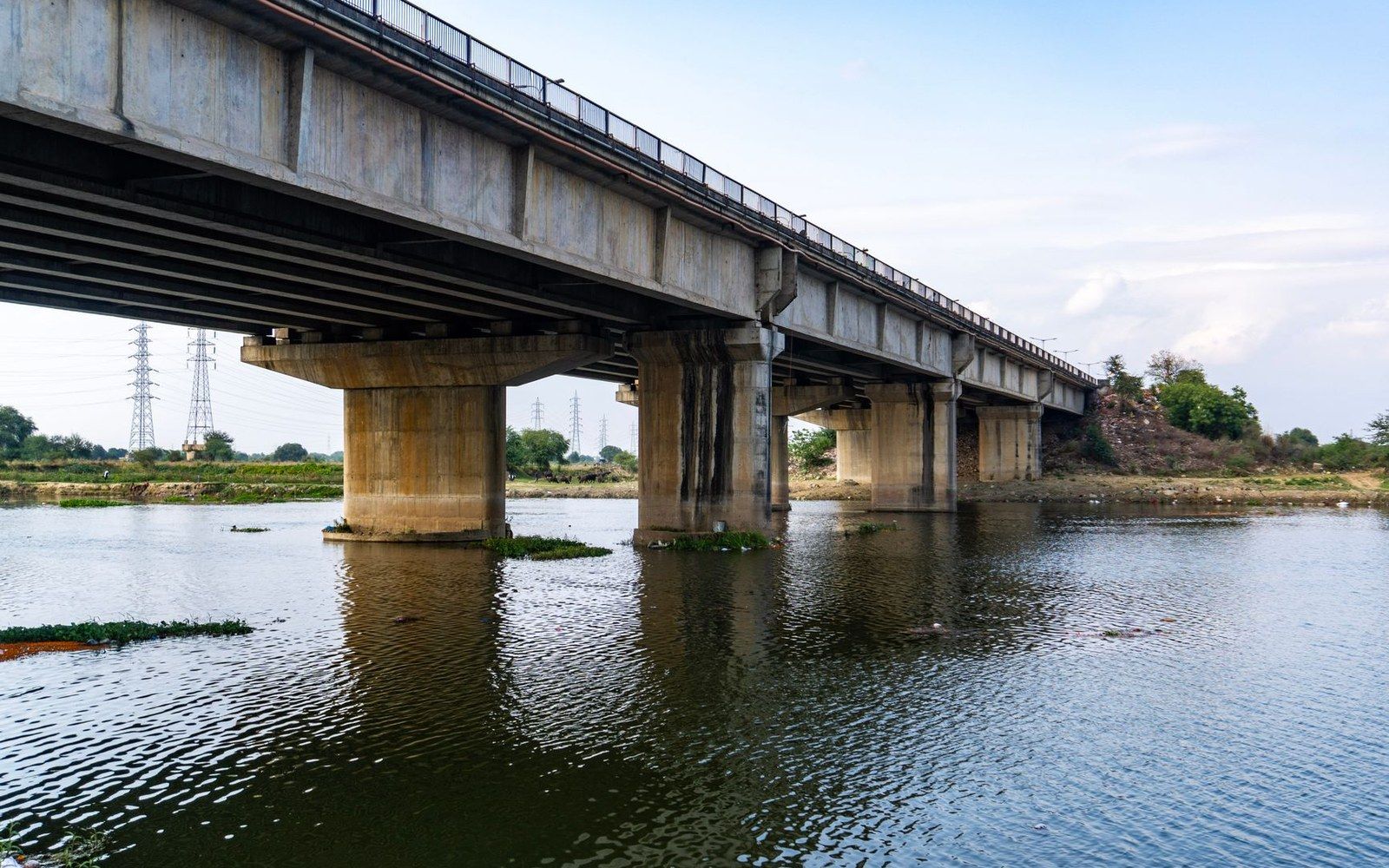
The engineering counterpart to that colonial fabric arrived in 1967, when the Angostura Bridge — Puente de Angostura — opened as the only fixed crossing of the Orinoco along its entire length. Designed by the British firm Sir William Halcrow & Partners, the suspension bridge spans 1,678 metres between its anchorages, with a central suspended span of 712 metres over the navigation channel. At its opening it ranked among the longest suspension bridges in South America. The bridge is a conventional suspension design, with cables hung from two tall towers carrying the deck across the navigation channel, which gives it a clean and instantly recognisable silhouette above the narrows.
Below the bridge, the river runs deep and fast through the narrows; above, the colonial town holds its bluff with an unhurried confidence that owes everything to geography. The Angostura crossing is not incidental to Ciudad Bolívar's identity — it is the reason the city exists at all, and the bridge simply gave that reason a form in steel and prestressed concrete.