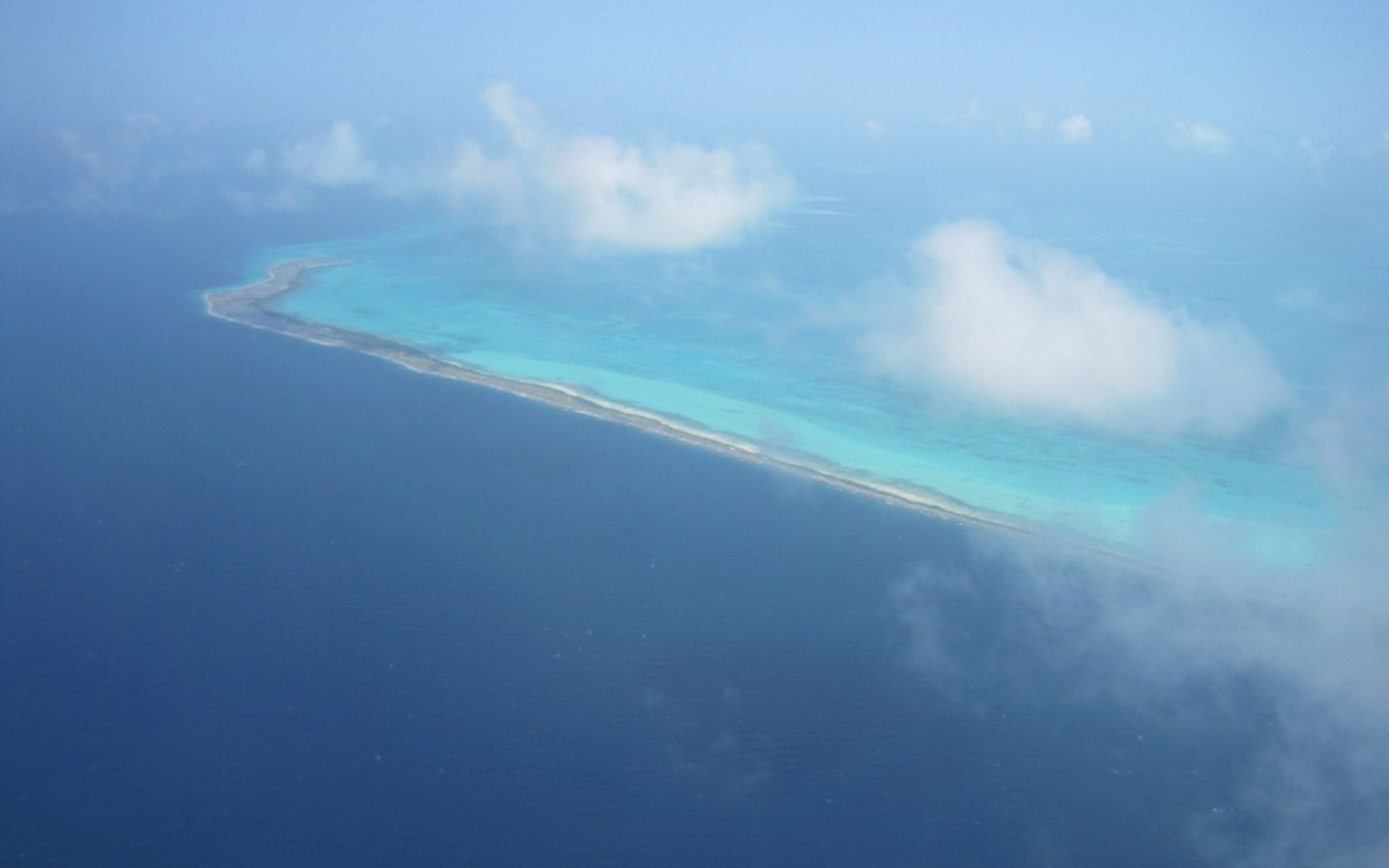
A Reef System in the Open Caribbean
Los Roques Archipelago National Park sits roughly 235 kilometres north of Caracas in the southern Caribbean, an oceanic system of approximately 50 cays, several lagoons and more than 300 coral reefs dispersed across a platform covering around 2,211 km². Venezuela established the park in 1972, making it one of the earliest marine protected areas in South America.
The atoll's defining feature is its shallow, closed lagoon — Gran Roque is the principal inhabited cay at its northern edge — bordered by a continuous barrier of living coral that keeps the interior water calm and exceptionally clear. Seagrass beds of Thalassia testudinum (turtle grass) cover extensive areas of the lagoon floor, functioning as nursery habitat for juvenile fish and feeding grounds for the Caribbean green turtle (Chelonia mydas) and the hawksbill (Eretmochelys imbricata), listed on the IUCN Red List as Endangered and Critically Endangered respectively.
Coral cover at Los Roques has historically been among the highest documented in the Caribbean, with surveys recording communities dominated by Acropora palmata (elkhorn coral) and Orbicella annularis (boulder star coral). Seabird colonies on the outer cays include the magnificent frigatebird (Fregata magnificens), the brown booby (Sula leucogaster) and nesting populations of four tern species. The bottlenose dolphin (Tursiops truncatus) is a year-round resident of the lagoon channel.
Administered by INPARQUES, Venezuela's national parks agency, Los Roques has no permanent agricultural activity and no industrial extraction; the only settlement is the small fishing community on Gran Roque itself. The park's isolation — no land mass intervenes between the archipelago and the continental shelf — means that open-ocean currents deliver nutrient-poor, high-clarity water that favours coral growth over algal competition, a condition that has sustained the reef system for millennia.